
Trinity County Property Tax Records
Trinity County property tax records are maintained by the County Assessor and Tax Collector in Weaverville. These offices work together to value property, bill owners, and collect payments. The Assessor determines property values each January 1. The Tax Collector sends bills twice yearly and processes all payments. Property tax information is public record under California law. You can search records using parcel numbers, street addresses, or owner names. The county provides online search tools plus in-person assistance at county offices in Weaverville. Records include assessed values, exemptions, special assessments, and payment history for all Trinity County properties.
Trinity County Property Tax Facts
Trinity County Assessor
The Trinity County Assessor is at 11 Court Street in Weaverville. Call 530-623-1257 for questions about assessments. The Assessor values all real property and business personal property in the county. Values are set each January 1, the lien date for property taxes.
California Proposition 13 controls how property is valued. When you buy property, it is assessed at the purchase price. Each year after that, the value can increase by up to two percent unless you add new construction. Major improvements like new buildings or room additions trigger a supplemental assessment. This system keeps property taxes predictable for owners.
If you build or remodel, report it to the Assessor. The office will inspect and determine the value to add. New construction value gets added to your assessment starting the next tax year or sooner through a supplemental bill. Failure to report improvements can result in penalties when discovered.
The Assessor keeps detailed records on every parcel. These include ownership information, parcel maps, building details, and assessment history. You can request copies of assessment rolls or parcel data. Some records are available online. Others require an office visit or written request with possible fees.
Tax Collector and Payment Methods
Trinity County Tax Collector handles all property tax billing and collection. Call 530-623-1251 with payment questions. The office is at 11 Court Street in Weaverville. Tax bills are sent in two installments each fiscal year.
First installment bills mail in October and are due November 1. They cover July through December. If not paid by 5:00 pm on December 10, a ten percent penalty is added. Second installment bills are due February 1 and cover January through June. These become delinquent at 5:00 pm on April 10 with a ten percent penalty plus costs.
Payment options include online, mail, and in person. The county website provides links for online payment. Credit and debit cards have a service fee. Electronic checks may be free or have a lower fee. Check current fees before paying.
For mail payments, send to the address on your bill. Include the payment stub. Payments must be postmarked by the due date. For in-person payments, visit the Tax Collector during business hours.
Search Tax Records
Trinity County provides access to property tax records. You can search online or visit county offices. Search by parcel number, property address, or owner name. The system shows current bills, payment history, and assessment details.
Your parcel number is on your tax bill and deed. It is also called an Assessor's Parcel Number or APN. This unique identifier is needed for most searches. Keep it with your property documents.
Search results show assessed value, exemptions, and total tax. You can see special assessments and bonds that add to your base tax. Payment history displays when payments were received and applied to your account.
Note: Searches are free for public use.
Tax Exemptions Available
Trinity County offers several property tax exemptions. The Homeowners' Exemption reduces assessed value by $7,000 for owner-occupied homes. File by February 15 to get the exemption for that tax year. Once granted, it renews automatically unless you move or sell the property.
Veterans with disabilities can apply for the Disabled Veterans' Exemption. The amount depends on disability rating and income. Higher disability percentages result in larger exemptions. Provide proof of VA disability rating when you apply.
Disabled persons under 62 who are not veterans may also qualify. You must meet income limits and provide proof of disability. Blind persons qualify for this exemption as well. Get forms from the Assessor at 530-623-1257.
Churches and nonprofits may get exemptions on property used for exempt purposes. These require annual filings. Contact the Assessor for forms and requirements.
File an Assessment Appeal
If you believe your assessment is too high, you can file an appeal. The Trinity County Assessment Appeals Board hears these cases. Regular appeals must be filed between July 2 and September 15. Some decline-in-value appeals can be filed until November 30. Verify deadlines with the Clerk of the Board.
Get an appeal form from the Assessor or Clerk of the Board. Complete all sections. State your opinion of the correct value and explain why you disagree. Attach evidence like recent sales of similar properties, a professional appraisal, or photos showing damage.
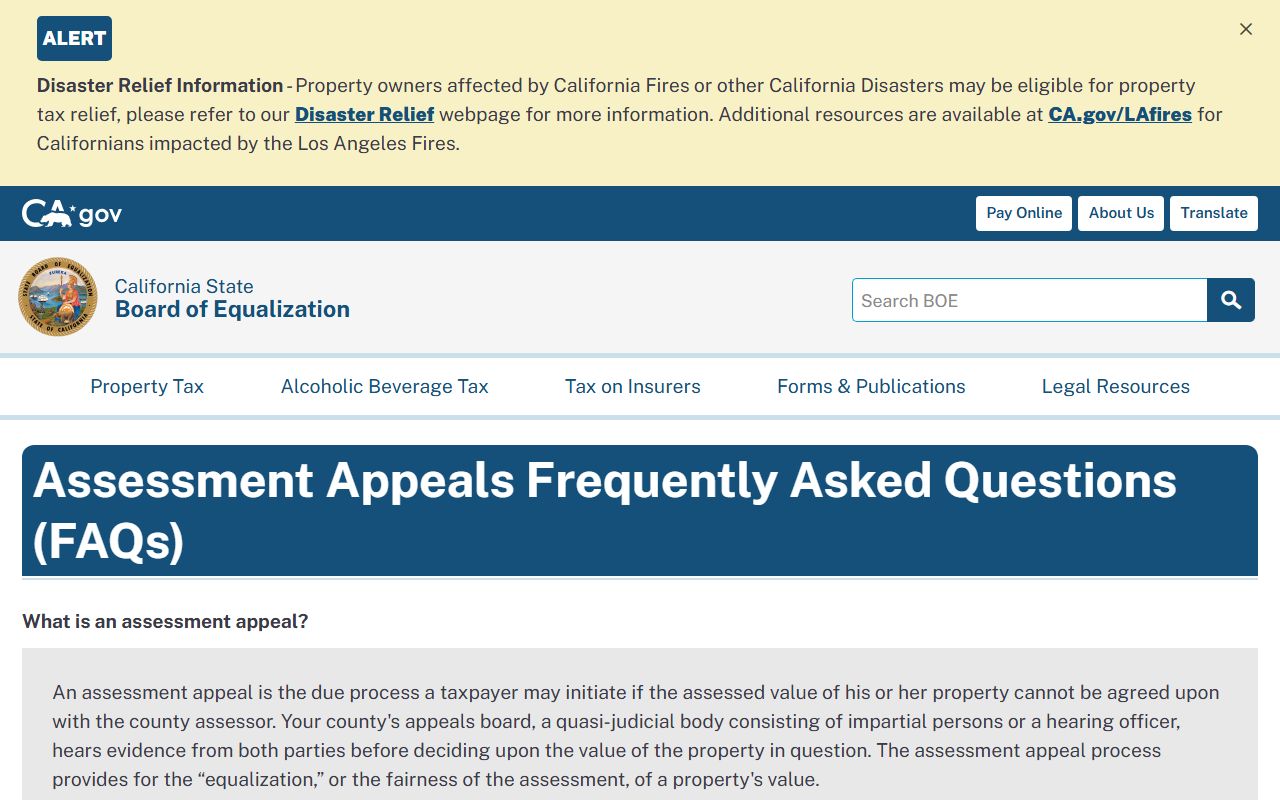
The Board schedules a hearing after you file. You get at least 45 days notice. At the hearing, present your case with evidence. The Assessor presents their valuation. The Board decides the correct value based on all evidence. You can represent yourself or hire help.
A successful appeal reduces your taxes for that year only. If you continue to disagree with future assessments, you must file a new appeal each year.
California Tax Law
California property taxes follow Proposition 13. This constitutional amendment limits the base tax rate to one percent of assessed value. It also caps annual increases at two percent unless ownership changes or new construction occurs. Proposition 13 is in California Constitution Article XIII A.
The California Revenue and Taxation Code contains detailed procedures. Section 218 covers the Homeowners' Exemption. Sections 1601 through 1604 govern assessment appeals. These laws apply to all counties including Trinity County.
The California State Board of Equalization oversees county assessors. They audit practices and issue guidance. Find resources at boe.ca.gov/proptaxes/proptax.htm.
Key Property Tax Dates
Important dates include January 1, the lien date when values are set. February 15 is the exemption filing deadline. November 1 is when first installment taxes are due. December 10 at 5:00 pm is when first installment becomes delinquent with a ten percent penalty.
February 1 is the second installment due date. April 10 at 5:00 pm is when second installment becomes delinquent. After June 30, unpaid taxes go into default. Business property statements are due April 1. Assessment appeals are filed between July 2 and September 15 or November 30.
Nearby Counties
Trinity County borders several other California counties. Each has separate property tax administration.