
Ventura County Property Tax Information
Ventura County property tax records are managed by the Treasurer-Tax Collector and Assessor offices. Property owners can search assessed values, view tax bills, and make payments through online portals. The county serves coastal and inland communities between Los Angeles and Santa Barbara. Credit card payments have a 2.75 percent fee. Visa and Mastercard debit cards have a 1.75 percent fee. Electronic checks cost $1.10 per transaction. Contact the Treasurer-Tax Collector at 805-654-3744 or email HelpingHand@venturacounty.gov for assistance with your property tax account and payment options available through the county system at 800 South Victoria Avenue in Ventura.
Ventura County Property Tax Facts
Treasurer-Tax Collector Office
The Ventura County Treasurer-Tax Collector bills and collects property taxes. Secured property tax bills mail in October each year. First installment is due November 1 and becomes delinquent December 10 at 5:00 pm. Second installment is due February 1 and becomes delinquent April 10 at 5:00 pm. Each late installment receives a ten percent penalty immediately after the deadline.
Call 805-654-3744 for tax questions. Email HelpingHand@venturacounty.gov with billing inquiries. The office is at 800 South Victoria Avenue, Ventura, CA 93009-1290. Office hours are Monday through Friday from 8:00 am to 5:00 pm. The official website at venturacounty.gov/ttc provides online payment options and tax information.
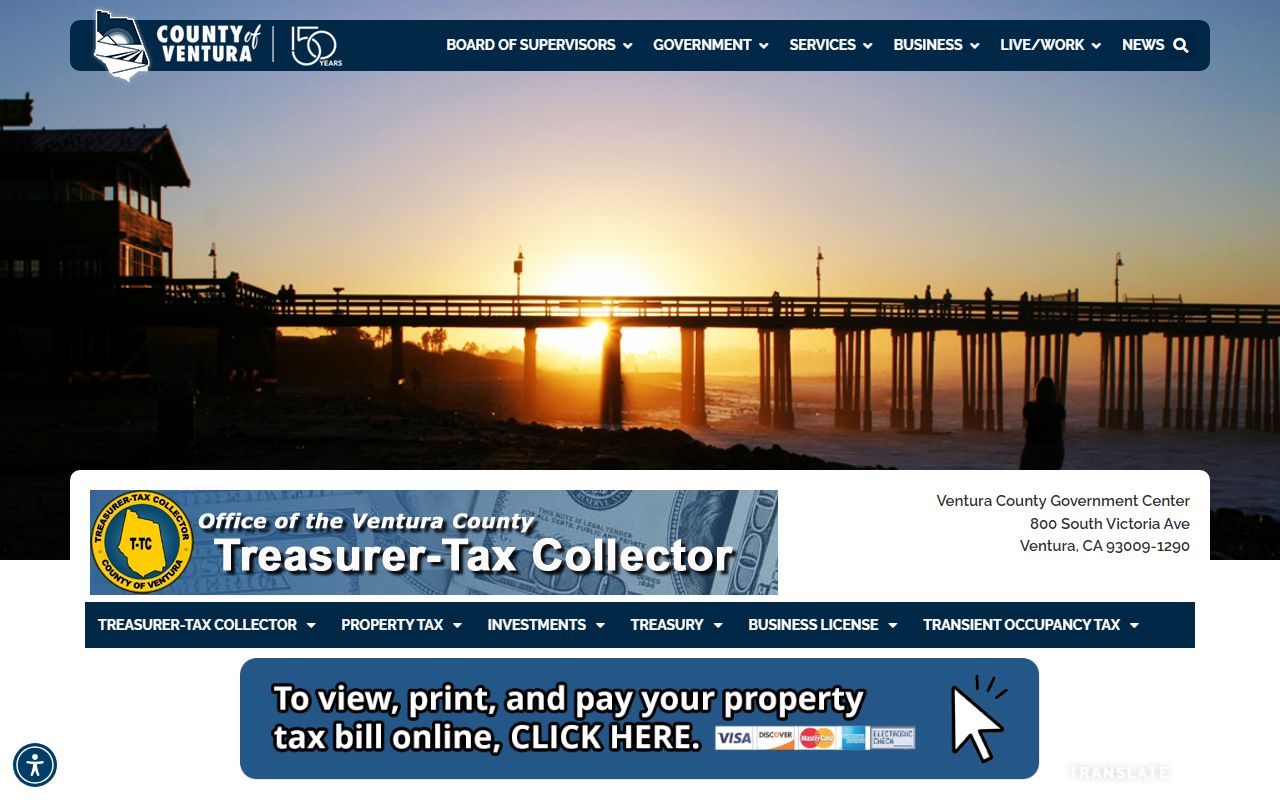
Payment fees are clearly listed. Credit cards have a 2.75 percent fee. Visa and Mastercard debit cards have a lower 1.75 percent fee. Electronic checks have a flat $1.10 fee per transaction. Choose the payment method with the lowest fee for your situation.
Assessor's Office
The Ventura County Assessor determines the value of all taxable property. Values are set each January 1 following Proposition 13 rules. The Assessor processes exemption claims and handles ownership changes. They maintain detailed records for all parcels throughout Ventura County.
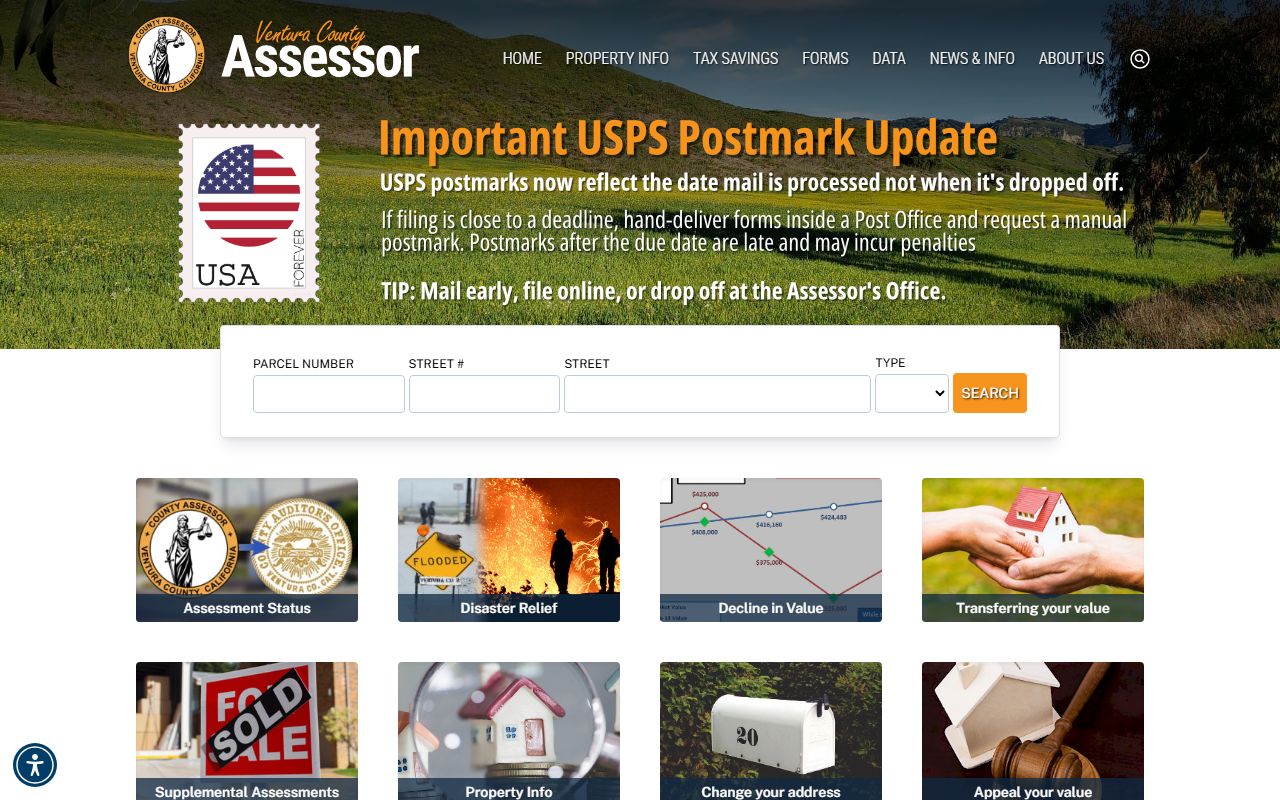
The Assessor's website at assessor.venturacounty.gov provides property search tools and forms. Look up any parcel by address, parcel number, or owner name. The database shows assessed value, property characteristics, exemptions, and sales history. This service is free to use.
Payment Methods and Fees
Ventura County charges different fees based on payment method. Credit card payments have a 2.75 percent convenience fee. This applies to Visa, Mastercard, Discover, and American Express credit cards. Visa and Mastercard debit cards have a lower 1.75 percent fee. Electronic checks cost $1.10 flat fee per transaction regardless of payment amount.
For large tax bills, the flat $1.10 electronic check fee may save money compared to percentage-based card fees. For small tax bills, the difference is minimal. Calculate the fee amount before selecting your payment method to choose the most economical option.
Pay online at venturacounty.gov/ttc. Enter your parcel number or property address to find your bill. The portal shows both installments, due dates, payment history, and any penalties. Select your payment method, review the fee, and complete the transaction.
Other Payment Options
Mail payments to the address on your tax bill. Include the payment stub with your check or money order. Postmarks on the due date count as on-time payment. Use certified mail if mailing close to the deadline for proof of mailing. Mail payments by check have no fee.
In-person payments are accepted at 800 South Victoria Avenue, Ventura during office hours. The counter takes cash, checks, money orders, and debit cards. Check with the office about in-person payment fees if using a debit card. Cash and checks typically have no fee for in-person payment.
Keep payment receipts as proof of payment. Online payments provide immediate electronic confirmation. Mail and in-person payments should be documented with receipts or certified mail records. These help resolve any disputes about payment timing or amounts.
Property Tax Exemptions
The Homeowners' Exemption reduces your assessed value by $7,000. You must own and occupy the property as your principal residence. File the claim with the Assessor by February 15 to receive the exemption for that tax year. Once approved, it renews automatically each year. Notify the Assessor if you move or rent out the property.
Veterans with disabilities qualify for exemptions based on disability rating and income. Basic exemption is $4,000 off assessed value. Low-income veterans with 100 percent disability can receive up to $138,173 exemption. Disabled persons under age 62 also qualify with income limits. Contact the Assessor for application forms and eligibility requirements.
Religious organizations, schools, hospitals, and charities can apply for welfare exemptions on property used for exempt purposes. These require annual filing by February 15 with documentation showing exempt use of the property.
Late Payment Penalties
Late payments receive a ten percent penalty on each installment. First installment penalties apply after 5:00 pm on December 10. Second installment penalties apply after 5:00 pm on April 10. These penalties are calculated on the installment amount, not the full year tax.
After June 30, unpaid taxes go into default. Defaulted taxes accrue additional interest and costs. The county can eventually sell properties with long-term unpaid taxes to recover amounts owed. Contact the Tax Collector at 805-654-3744 if you need help with delinquent taxes or payment arrangements.
Note: Payments must be received or postmarked by the due date to avoid penalties.
Filing Assessment Appeals
Property owners can appeal assessments they believe are too high. File your appeal between July 2 and September 15 for regular assessment appeals. Some decline-in-value appeals have extended deadlines to November 30. Check with the Clerk of the Assessment Appeals Board to confirm which deadline applies.
Get the appeal form from the Assessor or the Clerk of the Board. Complete property information, state your opinion of value, and explain why the current assessment is wrong. Attach supporting evidence like recent appraisals, comparable sales, or photos. Some counties charge a filing fee to cover administrative costs.
The Board schedules a hearing after you file. You receive written notice at least 45 days before the hearing date. At the hearing, present your case with evidence. The Assessor presents their valuation. The Board considers both sides and issues a written decision.
Major Cities in Ventura County
Ventura County includes several cities along the coast and inland valleys. The County Assessor and Tax Collector handle property taxes for all cities.
Nearby Counties
Ventura County borders Los Angeles, Kern, and Santa Barbara counties. Each county operates its own property tax system.