
San Bernardino County Property Tax Database
San Bernardino County property tax records are handled by the Assessor-Recorder-County Clerk and the Treasurer-Tax Collector. These two offices work together to assess, bill, and collect property taxes across the largest county by area in the United States. Property owners can search assessed values and pay taxes online through county portals. The Assessor values over 730,000 parcels each year as of January 1. The Tax Collector sends bills twice yearly and accepts payments through multiple methods. Online systems provide free access to property records, tax bills, and payment history without visiting a county office in person during standard business hours.
San Bernardino County Property Tax Facts
Assessor-Recorder-County Clerk
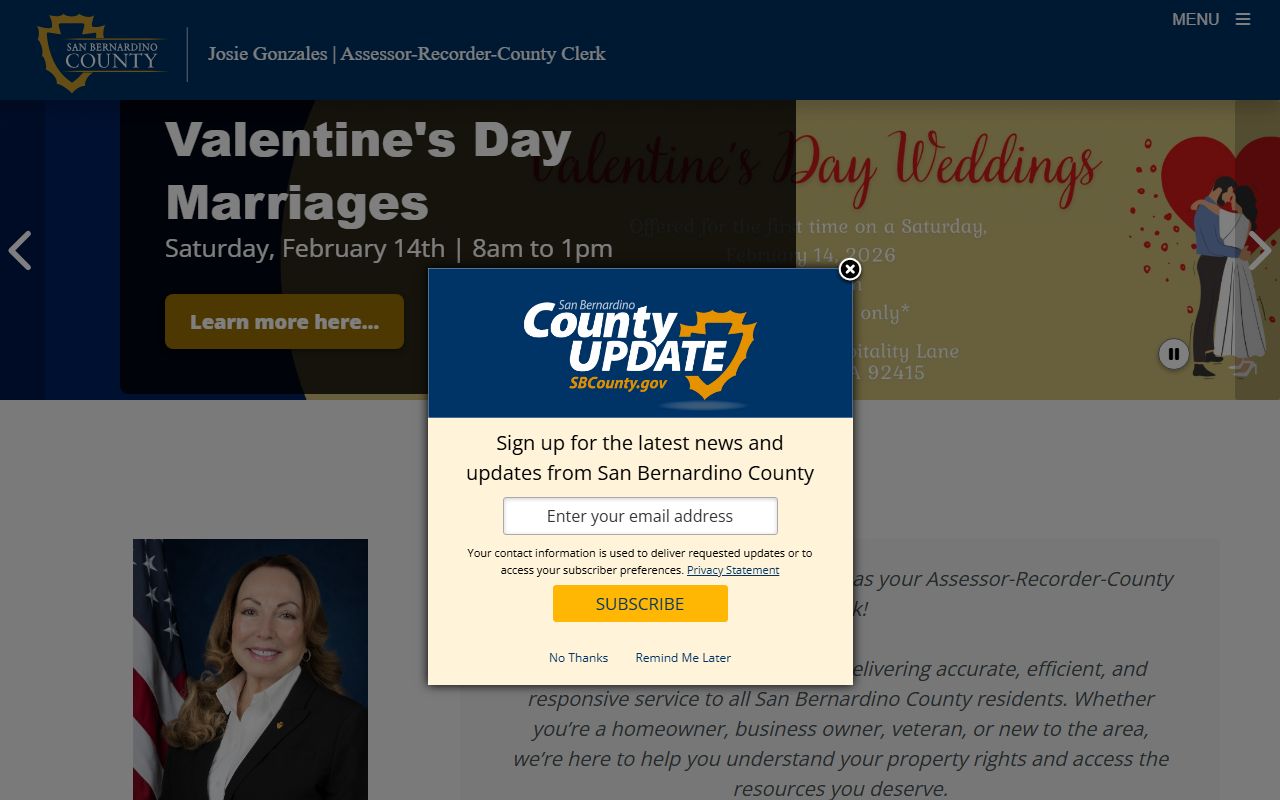
The San Bernardino County Assessor-Recorder-County Clerk combines three functions in one office. The Assessor side determines property values each January 1 following Proposition 13 rules. Staff process exemption applications and review ownership changes. The office maintains detailed records for every parcel in the county.
The main office is at 222 West Hospitality Lane, San Bernardino, CA 92415. Call 909-387-8307 for Assessor services. For Recorder-Clerk services, call 909-387-8306. Office hours are Monday through Friday from 8:00 am to 5:00 pm. The official website arc.sbcounty.gov has online search tools, forms, and contact information.
Property records are searchable online at no cost. Look up any parcel by address, parcel number, or owner name. The system shows assessed value, property characteristics, exemptions, and ownership history. Updates occur regularly to reflect new assessments and recorded documents.
Treasurer-Tax Collector
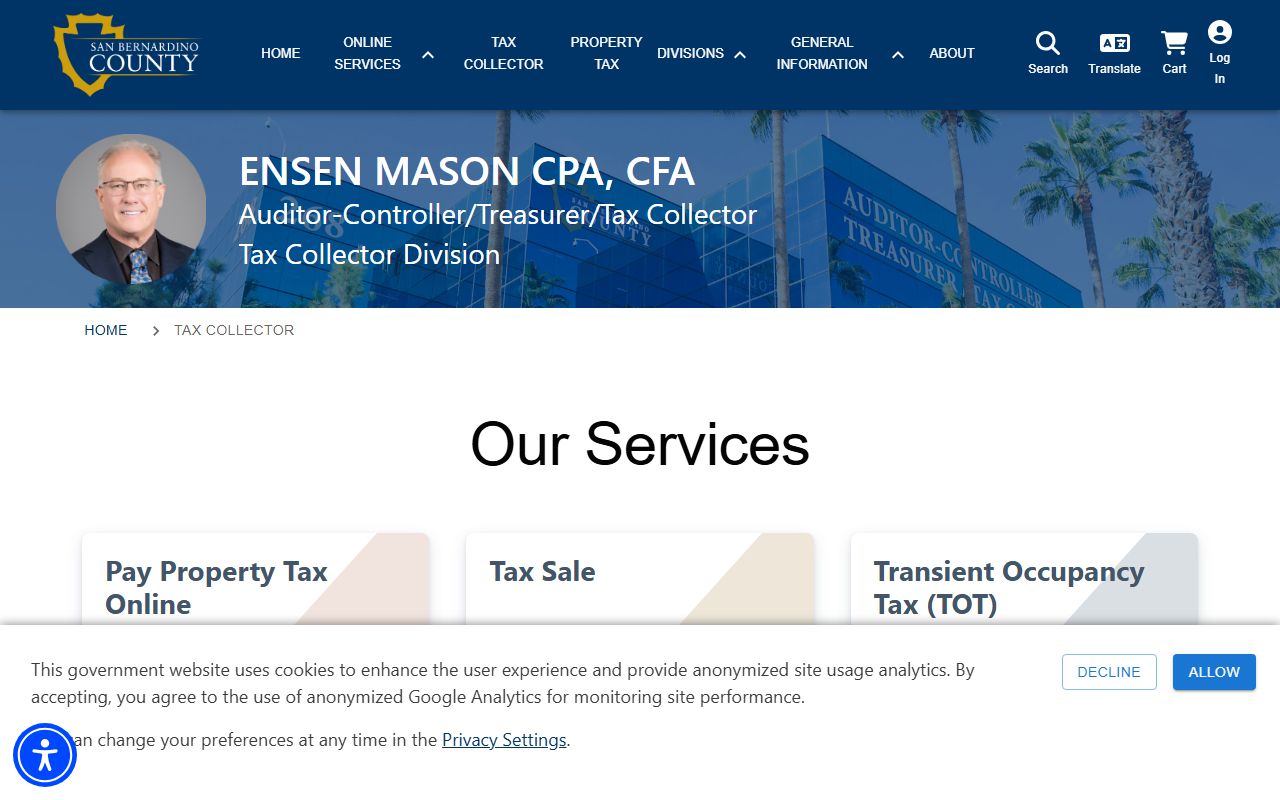
The San Bernardino County Treasurer-Tax Collector handles billing and collection of property taxes. Secured property tax bills mail in October each year. First installment is due November 1 and becomes delinquent December 10 at 5:00 pm. Second installment is due February 1 and becomes delinquent April 10 at 5:00 pm. Each late installment receives a ten percent penalty.
Contact the Tax Collector at 909-387-8308. The website at mytaxcollector.com provides online payment options and tax information. You can view your bill, check payment history, and make payments through the secure portal. The system accepts credit cards, debit cards, and electronic checks.
The county uses a modern payment system that processes transactions quickly. Electronic check payments typically have no fee or low fees. Credit and debit card payments have convenience fees that vary by payment processor. Check the payment portal for current fee amounts before completing your transaction.
How to Pay Property Taxes
Pay San Bernardino County property taxes online at mytaxcollector.com. Enter your parcel number or property address to find your bill. The portal shows both installments, due dates, and any penalties. Select your payment method and complete the transaction. You get a receipt immediately after payment.
Mail payments to the address on your tax bill. Include the payment stub with your check or money order. Postmarks on the due date count as on-time payment. Use certified mail if mailing close to the deadline for proof of mailing. In-person payments are accepted at county offices during business hours. Call 909-387-8308 for office locations that take tax payments.
Some areas of San Bernardino County are remote or in mountain regions. The county provides payment options for residents in all areas including online, mail, and phone payments. Check the website for all available payment methods.
Property Tax Exemptions
San Bernardino County offers the standard Homeowners' Exemption of $7,000 reduction in assessed value. You must own and occupy the property as your main residence. File by February 15 to get the exemption for that tax year. Once approved, it renews each year automatically unless you move or change how you use the property.
Veterans with disabilities qualify for exemptions based on disability rating. Basic exemption is $4,000. Veterans with low income and 100 percent disability can receive up to $138,173 exemption. Disabled persons under age 62 qualify for exemptions with income restrictions. Download forms at arc.sbcounty.gov or call 909-387-8307.
Religious organizations, schools, hospitals, and charities can apply for welfare exemptions. These require annual filing with documentation showing exempt use of the property. Business equipment and fixtures may also qualify for certain exemptions. Contact the Assessor for details on eligibility and application procedures.
Note: All exemption applications must be filed by February 15 to apply for the current tax year.
Filing Assessment Appeals
Property owners who believe their assessment is too high can file an appeal with the Assessment Appeals Board. Regular appeals must be filed between July 2 and September 15. Some decline-in-value appeals have extended deadlines to November 30. Check with the Clerk of the Board to confirm which deadline applies to your situation.
Get the appeal form from the Assessor or download it from the county website. The form requires property information, your opinion of value, and reasons for the appeal. Attach supporting documents like recent appraisals, sales of similar properties, or photos showing property condition. Filing fees may apply to cover administrative costs.
After filing, the Board schedules a hearing. You receive notice at least 45 days before the hearing date. At the hearing, present your evidence explaining why the assessment is wrong. The Assessor presents their case for the current value. The Board hears both sides and issues a written decision. Most hearings take 15 to 30 minutes. You can represent yourself or hire a property tax consultant or attorney.
County Size and Property Distribution
San Bernardino County is the largest county by area in the United States, covering over 20,000 square miles. This includes urban areas near Los Angeles, high desert communities, mountain regions, and vast expanses of desert. Property values vary widely across these different regions.
Urban areas like San Bernardino, Fontana, and Rancho Cucamonga have higher property values and more services. Desert communities like Victorville and Hesperia have different market conditions. Mountain areas such as Big Bear and Lake Arrowhead have seasonal property considerations. The Assessor accounts for these regional differences when valuing property.
Major Cities in San Bernardino County
San Bernardino County includes several cities over 100,000 population. The County Assessor and Tax Collector handle property taxes for all incorporated cities and unincorporated areas.
Nearby Counties
San Bernardino County borders Riverside, Los Angeles, Orange, Kern, and Inyo counties. Each county manages its own property tax system.