
Sonoma County Property Tax Information
Property tax records in Sonoma County are handled by the Auditor-Controller-Treasurer-Tax Collector office. This office combines assessment oversight, tax collection, and treasury functions under one department. Property owners can search bills, make payments, and view assessment data through online systems. Values are set each January 1 following Proposition 13 rules. Tax bills arrive twice a year with payment due dates in November and February. Most records are available online at no cost. You can search by parcel number, address, or property owner name to find tax information.
Sonoma County Tax Overview
Sonoma County Tax Collector Services
The Auditor-Controller-Treasurer-Tax Collector manages property tax billing and collection for Sonoma County. This office sends out secured property tax bills twice per year. First installment bills go out in October. Payment is due November 1 and becomes delinquent at 5:00 pm on December 10. A ten percent penalty applies to late payments. Second installment bills are due February 1 and become delinquent April 10 with another ten percent penalty.
Reach the Tax Collector at 707-565-2281. Send email to Taxcollector@sonomacounty.gov for questions about bills or payments. The office is at 585 Fiscal Drive, Suite 100, Santa Rosa, CA 95403. Staff can help with payment plans, bill copies, and general tax questions. Office hours run Monday through Friday.
Sonoma County uses an online payment portal at common3.mptsweb.com/mbc/sonoma/tax/search where property owners can look up bills and make payments. The system accepts electronic checks for free. Credit and debit card payments have a 2.34 percent service fee. Returned payments incur a $30 fee.
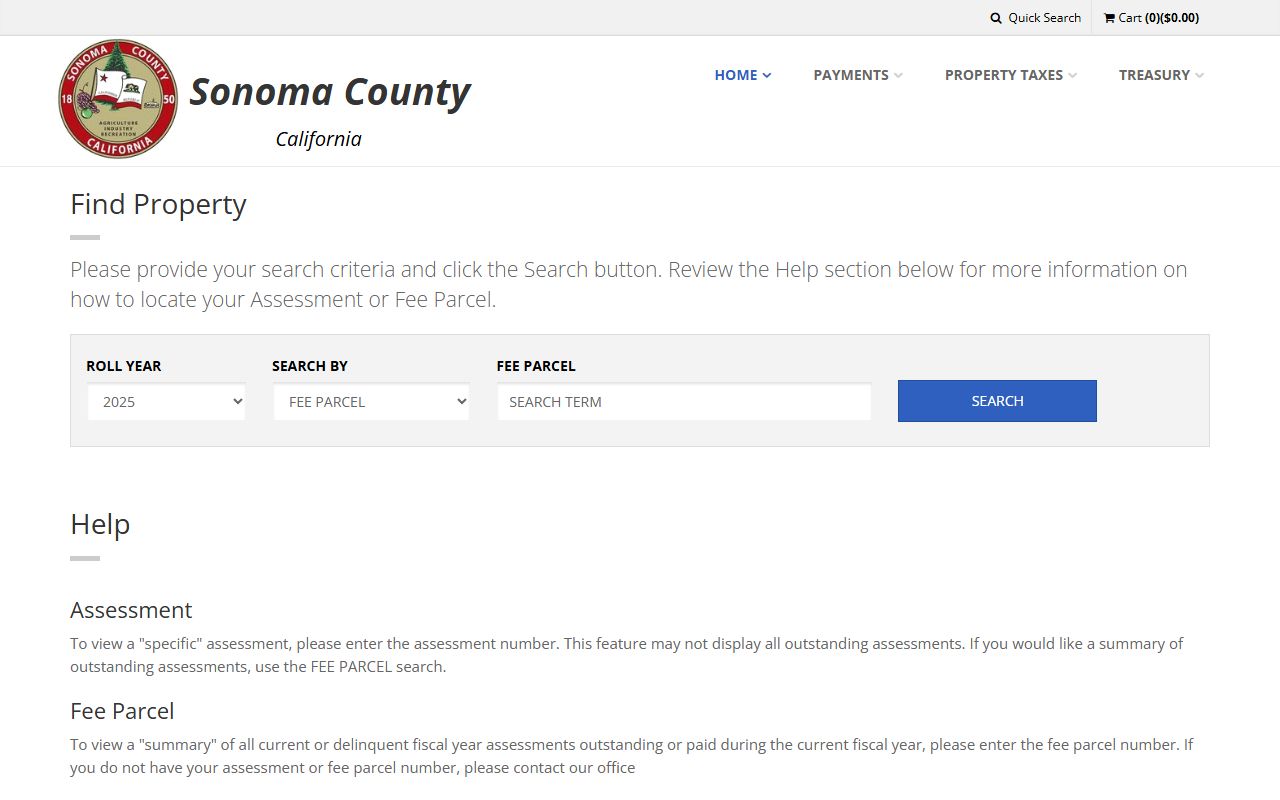
Search Property Tax Records Online
Property owners in Sonoma County can access tax information through the county payment portal. Enter your parcel number or property address to pull up current bills. The system shows both installments for the tax year. You can see payment history and any penalties applied. Downloadable copies of bills are available.
The portal provides details on:
- Current year tax amounts for both installments
- Payment due dates and delinquency information
- Prior year payment records and receipts
- Parcel numbers and property location data
- Special assessments or district charges
Searches require either a parcel number or full street address. The parcel number is the most reliable way to find your property. You can locate your parcel number on previous tax bills or county notices. Address searches work best when you include the city name or zip code.
How to Pay Property Taxes
Sonoma County accepts payments through multiple channels. Online payment via the county portal is fast and convenient. Electronic checks have no fee. Credit and debit cards incur a 2.34 percent charge on the payment amount. The portal processes payments immediately and provides instant confirmation.
Mail payments to the address shown on your tax bill. Include the payment stub with your check. Use certified mail if sending close to the deadline for proof of mailing. Payments postmarked by the due date are considered timely. The office address is 585 Fiscal Drive, Suite 100, Santa Rosa, CA 95403.
In-person payments are accepted at the Tax Collector office during regular business hours. Bring your bill stub. The office takes checks, money orders, and cash. Some banks also accept property tax payments on behalf of the county. Call ahead to verify payment locations and fees.
Note: Set up payments early to avoid last-minute problems with online systems or mail delays.
Property Tax Exemptions
Sonoma County homeowners can claim the Homeowners' Exemption for a $7,000 reduction in assessed value. You must own and live in the property as your main home. File the exemption claim by February 15. Once granted, the exemption continues each year unless you move or sell. The exemption reduces your tax bill by about $70 per year.
Veterans with service-connected disabilities qualify for additional exemptions. The amount depends on disability rating and household income. Disabled persons under age 62 may also get an exemption. File claims with the Sonoma County Assessor. Forms are available online or at county offices.
Senior citizens age 65 and older may qualify for property tax postponement through the State Controller's Office. This program lets you defer current year taxes if you meet income and equity requirements. Interest accrues at five percent per year. Contact the State Controller at 800-952-5661 for program details.
Appealing Your Assessment
Property owners who think their assessed value is too high can file an appeal with the Sonoma County Assessment Appeals Board. Regular appeals must be filed between July 2 and September 15. Some decline-in-value appeals have different deadlines. Check with the Clerk of the Board for specific filing periods.
Get the appeal application from the County Assessor or the Appeals Board clerk. The form asks for property details, your opinion of value, and reasons for the appeal. You may need to pay a filing fee. Attach supporting evidence like recent comparable sales, appraisals, or photos.
The Board schedules hearings and notifies you at least 45 days in advance. At the hearing, you present your evidence and testimony. The Assessor also presents their case. The Board decides the correct market value. Successful appeals reduce your tax bill for that year. The process can take several months from filing to decision.
Understanding Proposition 13
California property taxes follow rules set by Proposition 13, passed in 1978. The base tax rate is limited to one percent of assessed value. Additional voter-approved bonds and assessments can add to this base rate. Property values are established at purchase price and can increase by a maximum of two percent per year unless the property sells or undergoes new construction.
When you buy property in Sonoma County, the Assessor sets your initial value at the purchase price. This becomes your base year value. Each year after, the Assessor can raise your value by up to two percent or lower it if market values drop. Major remodels or additions trigger a supplemental assessment for the new construction portion only.
Additional County Resources
The Sonoma County Assessor's Office handles property valuation and exemption processing. While tax collection is managed by the combined department, assessment functions remain separate. Contact the Assessor for questions about property values, ownership changes, or exemption eligibility.
The County Clerk-Recorder-Assessor maintains property records and handles deed recordings. These records are separate from tax information but relate to ownership transfers. When property changes hands, the Recorder updates ownership records and notifies the Assessor of the transfer for reassessment purposes.
Sonoma County has no cities over 100,000 population. Property taxes for all cities and unincorporated areas are collected by the county. Special assessment districts exist in some areas for lighting, landscaping, or other services. These show as separate line items on your tax bill.
Nearby Counties
Sonoma County borders several other California counties. Each manages its own property tax system with similar but not identical procedures.